
The Art of Dissolving

This piece is accompanied by a special audio track.
There is a moment that arrives at the end of each day like an invitation.
I often miss it.
I have hurtled through the day from thought to thought, convinced the next right one will get me closer to whatever it is I’m chasing, or further away from whatever I’m trying to leave behind. I can easily think my way right into sleep, holding onto myself with a pressure tight enough to wear down teeth.
How does the invitation get in? I’m not sure. Maybe I’m so tired that I pause on the threshold of my room, the carpet around the metal door strip worn and frayed. Perhaps I have to put out a hand to the cupboard to steady myself, and something about the longer breath that comes or the feel of the cool melamine creates a space, just wide enough. The invitation slips under and in.
I remember then to sit with a sigh. To close my eyes. Not to sleep, but to empty myself out of all of this, all of this… me.
I keep thinking I need to hold on, but I don’t. I don’t really need any of this.
The blinds have been tugged half-closed in front of the open window. Thick cloud from a rainy day makes the room dull behind my eyelids. I am aware of the glow of the lamp I switched on as I came in, the soft creak of the bed as my partner shifts position.
I feel my body; this strange, miraculous, reverberating carriage. I feel the buzz and shift and pressure of the day moving through its limbs, their over-packed corridors, a million tiny pulses trying to muscle their way through, as stressed and rushed at the end of the day as I am. I think, sleepily, they’re just trying to get home, and wonder where that home is and how I could make it somewhere good for them.
Slowly, slowly, the corridors empty, quieten. My body begins to loosen and change. A new kind of worker has arrived to fill me, unseen, knowing, willing. Hands, worn and strong, all over, begin to gently pry loose the knots that make me, pulling them apart thread by thread. I feel them — me — begin to gather in drifts on the floor. My golden lights are switched off, one by one. I am slowly made into darkness. I am not a building anymore. I am something less opaque, like water, like cloud, like…
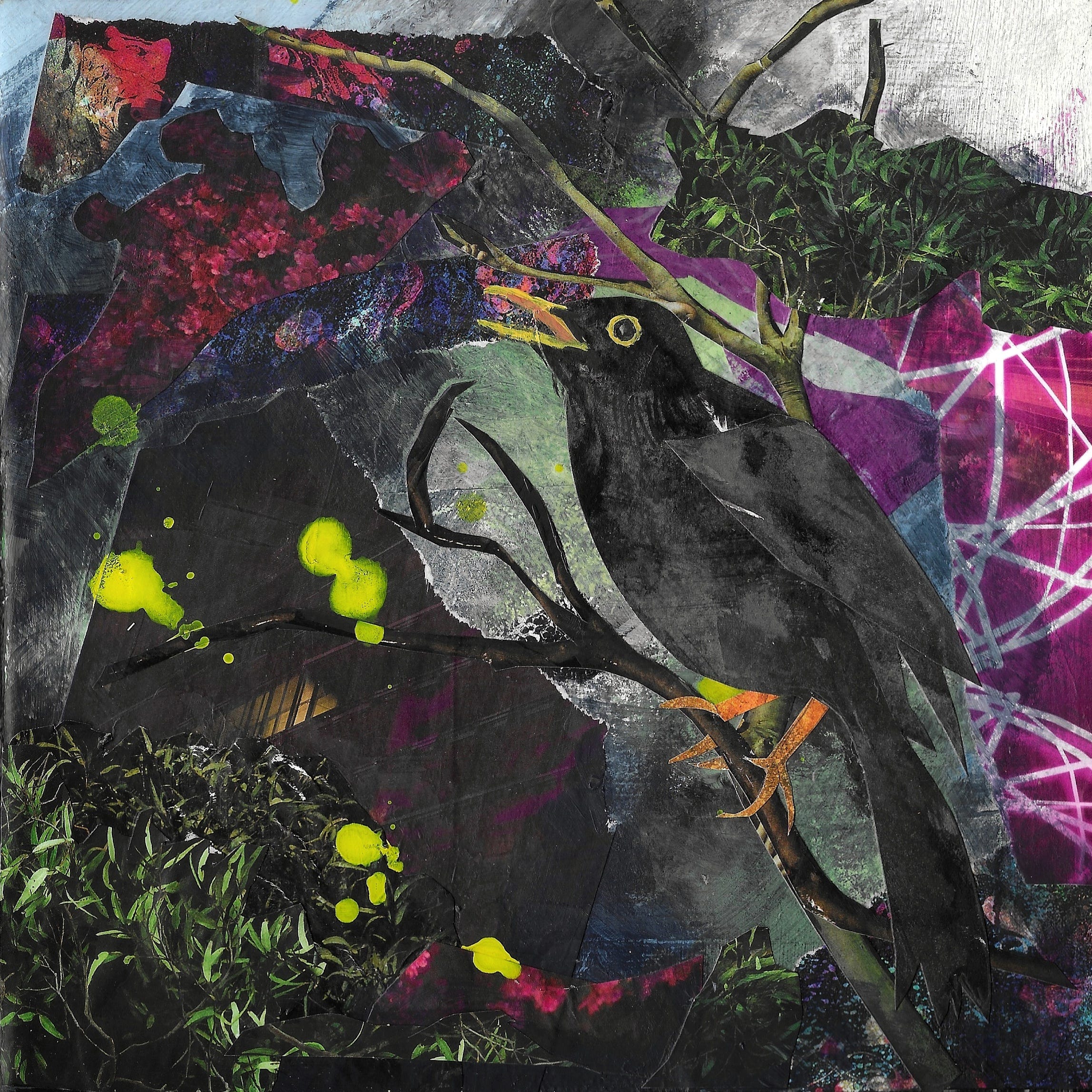
A blackbird begins to sing outside.
Whatever is left of me listens, peels off, and rises like song to join it.
I climb into bed. Fraser pulls me close. Song I am and song he is, and song the blackbird is too, and the idea, then, of us all having edges, all being these hard little boxes convinced of our own separate, self-important journeys, it seems ridiculous, so I laugh at it; I laugh at the self I thought I was today, so utterly mistaken about almost everything, and that is a good way to end the day.
It feels strange to tell you that I’m practising dissolving, but I am.
Everyone these days tells you to think and work and act your way into being more ‘yourself’, but this is when I feel it most, most… true. When I am brave enough to be everything, or nothing.
Especially nothing at all.
You’re reading bimblings — my heartfelt offering to a generous universe. If you’re new here, you might like to read more about me and my work here.
If you subscribe, you’ll receive a couple of posts like this a month. They’re always free and written with love.
Upgrading to a paid subscription is entirely voluntary, but, as it’s my only source of income right now, it makes a huge, huge difference to me. I’ve set it to the lowest amount Substack allows so that as many of you as possible might feel able to to support me and help protect my livelihood as I write, make art, and try to fill the world with good things.
Paid subscribers receive an extra post a month in which I share a little more of my life. This year I’m exploring some new ways to think.
If subscribing isn’t for you, perhaps you’d like to buy me a coffee instead? It all helps me and my family enormously. Thank you so much for being here.
For more ways to see the world differently:
{ My new book Letters From Wonderland is out now! }
Have you seen my teaser video?
I just finished a conversation with author Sophie Strand and we, too, are practicing “dissolving”—or becoming more porous to this life, leaning into the infinite conversations our bodies are having with pollen, season and memory. Losing this boundary of self is something illness teaches us over and over again, all the usual trappings of ego unable to stick when illness insists another way. Sophie described it beautifully when she said, “I have not been inside a love story. I have been a love story: my very body a clamorous, complicated interplay of beings disagreeing, singing, swooning, and melting together. As a year, then two years, passed during which I did not take human lovers, I realized that I was not really “single.” I was deeply plural: my whole life was erotic, flush with sensual, multispecies love.”
Thank you Josie for reading your beautiful essay. 'I remember then to sit with a sigh.'
Yes! That sigh is a wonderful release of the tensions that we hold onto in a day. It is the sound, like a soft chime, that reverbrates through one's body to let our nervous system know that it is time to relax, calm down, breathe. Release.